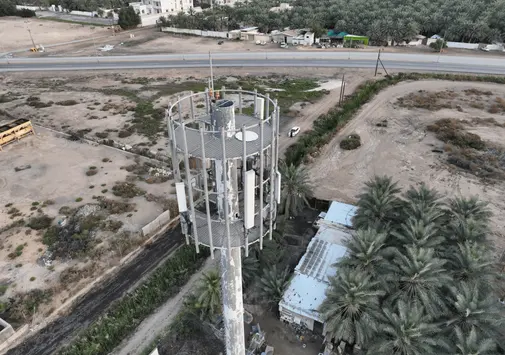
Every elevated or expansive structure — a tank, a stack, a tower facade, a factory roof — needs periodic inspection. The traditional method is familiar: scaffolding, lifts, or rope-access crews, at high cost, weeks of mobilization, and real risk to the inspection team. In recent years, drone inspection has matured into a serious alternative in the Saudi market — but it isn't the right answer for every case. This article explains when it is.
Where aerial inspection clearly wins
- Elevated or hazardous components: what needs scaffolding or ropes to reach, a drone reaches in minutes.
- Operational continuity: external aerial inspection usually requires no facility shutdown.
- Complete coverage: drones scan the entire structure in high resolution, not scattered samples.
- Documentation and comparison: every scan becomes a dated record comparable against previous ones to track degradation.
- Speed: field capture is typically a day or less per structure versus weeks of mobilization.
And where manual inspection remains necessary
Drones see but don't touch. Tests requiring direct contact — ultrasonic thickness measurement, hardness testing, checking behind insulation — remain manual. The best practice we follow: aerial inspection covers the full structure and flags suspect areas, then expensive manual access is limited to exactly those points. The result is a more complete inspection at a fraction of the access cost.
What do you receive at the end of a mission?
- High-resolution inspection imagery of every component, organized by location on the structure.
- An illustrated report classifying findings by severity, each located on the asset.
- Comparison with previous inspections where available, to track trends.
- Optionally: automated defect detection using computer vision — cracks, corrosion, and leaks flagged automatically and reviewed by engineers.
Certification and regulation in the Kingdom
Commercial drone operation in Saudi Arabia is regulated by GACA, the General Authority of Civil Aviation. Ask any provider about pilot certification and permit handling: at Skyin, our pilots are FAA Part 107 certified via GACA and OSHA safety trained for industrial sites, and permit coordination is part of the service — not an extra burden on you.
Have a structure that's difficult or costly to inspect? Get in touch — we'll assess your case and tell you honestly whether aerial inspection fits it.